USF engineering research team tackles America’s hidden sanitation crisis with breakthrough wastewater technologyArticle Title
In a world where artificial intelligence is reshaping industries and space travel
is becoming routine, millions of people in the United States still live without access
to safe, modern wastewater systems. Across rural towns and islands, families rely
on outdated septic tanks or even cesspools in their backyards; these systems pollute
waterways, endanger health, and are too costly to replace.
To address this overlooked crisis, engineers at the University of South Florida are
developing a solution that could transform how wastewater is managed in homes and
small communities nationwide. The National Science Foundation has renewed support
for the effort with a $5 million, three-year Convergence Accelerator Phase Two award
to advance a consumer-ready wastewater system that can be mass produced and deployed
to the public.
Led by Daniel Yeh, professor in the Department of Civil and Environmental Engineering,
the project will push the team’s “Honu Hub” technology from research prototype to
a certified product through testing, pilot demonstrations in Hawaii, and extensive
customer validation. The Honu Hub is designed to recycle wastewater for beneficial
reuse and remove nitrogen that pollutes waterways, all while running on solar power.
“Our focus now is to make sure there’s a true problem-solution fit,” Yeh said. “Too
many academic technologies stay in the lab. This award is about proving value, achieving
certification and delivering a product that homeowners, engineers, and installers
can trust.”
The Honu Hub builds on Yeh’s earlier invention, the NEWgenerator, a portable sanitation
system supported by the Bill and Melinda Gates Foundation. The NEWgenerator has been
deployed in India and South Africa, where it provides safe sanitation and water reuse
in schools and communities.
In South Africa, the system has been licensed to a local company, WEC Water, which
constructed units after a collaborative technology transfer from the USF team. NEWgenerator
units are now serving communities in Durban, Johannesburg, and Cape Town, and have
been installed at 16 schools in the Eastern Cape Province.
For many of those schools, the system replaced dangerous pit latrines. The first school
to adopt it had no electricity or piped water, relying solely on captured rainwater.
The NEWgenerator, powered by solar energy, allowed that water to be recycled repeatedly
for use in flush toilets. Students who once relied on pit latrines now use proper
toilets, and the school dismantled the old facilities.
“That was a transformational moment,” Yeh said. “The children went from unsafe pits
to safe sanitation. It showed us what this technology could do for communities.”

While the NEWgenerator demonstrated success overseas, the challenge was moving from
a research innovation to a product that can be widely manufactured and sold. That
opportunity arrived through NSF’s Convergence Accelerator, a program designed to help
researchers from different disciplines come together to solve real-world problems
and accelerate solutions into the marketplace.
In Phase One of the Future Water Systems Track, Yeh’s team received $650,000 and completed
coursework in entrepreneurship, investor pitching and storytelling, human-centered
design, customer interviews, and team building. From 16 teams, six advanced to Phase
Two, each awarded $5 million to bring technologies to market.The team also adopted
a new identity, calling themselves Team Honu, after the Hawaiian word for the green
sea turtle, which symbolizes protection of oceans and reefs threatened by nitrogen
pollution. The product name, Honu Hub, emphasizes collaboration and community ownership
while recognizing its lineage as “powered by NEWgenerator.”
The Honu Hub was conceived for island communities, which face unique wastewater challenges
due to geography, limited infrastructure, and proximity to fragile marine environments.
In Hawaii alone, there are an estimated 83,000 cesspools that discharge 52 million
gallons of untreated waste directly into the ground each day, contaminating coastal
waters and killing coral reefs. Replacing cesspools with approved systems can cost
households $30,000 to $50,000, an expense beyond the reach of many families.
By providing a solar-powered, compact, certifiable alternative, Yeh said the Honu
Hub could relieve families of that burden while protecting human health and the environment.
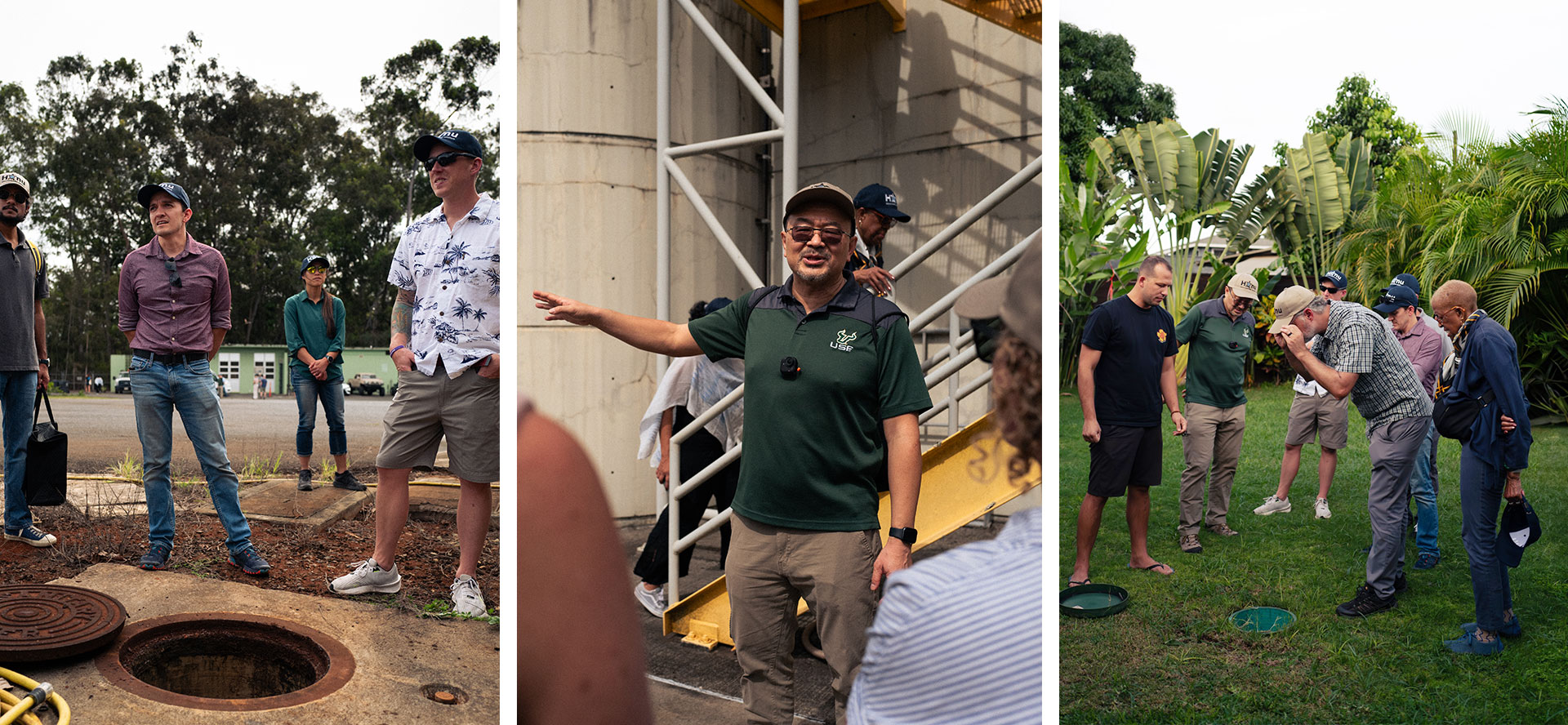
Pilot demonstrations will take place in Hawaii to show homeowners, engineers, installers,
and regulators how the system works in real conditions.
At the same time, Yeh uses “island communities” metaphorically to describe isolated
regions in the United States where infrastructure is lacking. Rural Alabama, Appalachia,
remote communities in the Southwest and Alaska, and even coastal Florida all face
challenges with septic systems that fail due to soil or water table conditions.
“About a quarter of American households – 31 million homes – are not connected to
sewers,” Yeh said. “Traditional septic tanks do not work in many places. Our technology
eliminates the need for a drain field, so it can be installed on smaller lots or in
areas where the soil conditions are unsuitable. The onsite systems sector is a $1
trillon market with tremendous unmet needs.”
The Honu Hub is designed with four key features:
- Water recycling for irrigation, firefighting, or reuse
- Nitrogen removal to protect water quality and reefs
- Solar-powered operation for complete off-grid capability
- Automation and remote monitoring for enhanced reliability
Together, these capabilities position the system as a consumer-friendly product that
reduces maintenance, extends service intervals, and provides resilience during emergencies
such as wildfires or water shortages. By providing water reuse and renewable power,
the Honu Hub could become a community resilience tool. In the wake of the 2023 wildfires
in Lahaina, Maui, Yeh said residents have been asking how they can build emergency
water supplies. Recycled water from Honu Hub could help fill that gap.
A central goal of the NSF award is to achieve the widely recognized National Sanitation
Foundation (NSF International) certification, which would prove the system meets industry
standards and reduce risk for investors and customers. Certification will also make
the product more attractive to governments and nonprofits seeking solutions for wastewater
challenges.
The project includes workforce development to ensure the technology can be supported
from manufacturing to installation and maintenance. “If you just develop a product
and drop it into a community without people trained to work with it, it will fail,”
Yeh said. “We are also developing education and workforce training alongside the technology.”
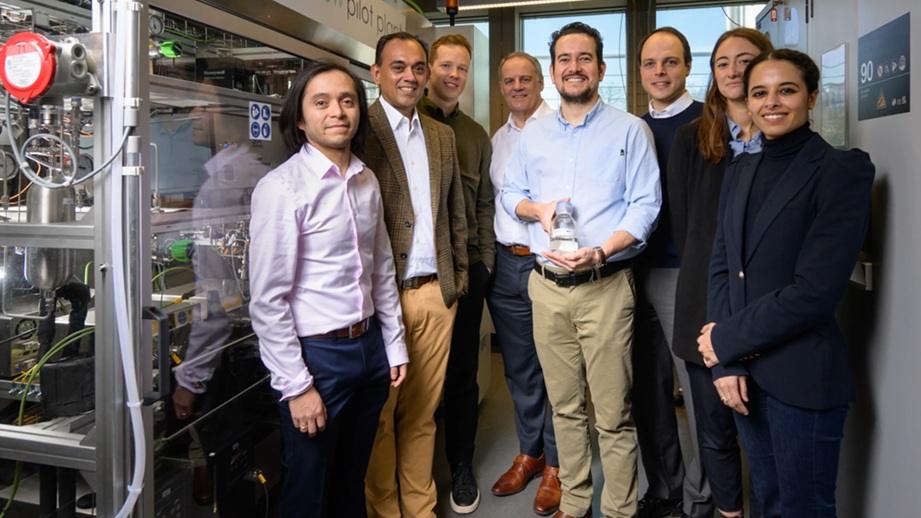
Joining Yeh as members of Team Honu are researchers from the University of Hawaii
at Manoa, and professionals from WAI.org and SwiftWater Solutions. The USF team includes
Robert Bair, who began working with Yeh as an undergraduate in 2009, completed his
PhD on the project, stayed on as a postdoctoral researcher and is now a Senior Development
Engineer. Also from USF is Hsiang-Yang (Gary) Shyu, postdoctoral researcher in the
College of Engineering, who is introducing artificial intelligence and machine learning
into system design and monitoring.
“The passion of our team members is what drives this work forward,” Yeh said. “We
want to deliver not just a product, but a foundation for the people who will build,
operate, and benefit from it.”
With NSF’s backing, the team’s goal is to deliver a certified, industry-ready product
within three years. Demonstrations in Hawaii and continued development at USF will
set the stage for scaling to the broader U.S. market and beyond.
“This is about taking something that worked in schools and villages overseas and making
it accessible to families here at home,” Yeh said. “If we succeed, this will not just
be a research project. It will be a product that protects the environment and improves
the lives of millions of Americans.”
link