Tech startup TreisD is moving headquarters onto UT Research Park


What makes Center for Precision Health unique
Brad Day, Associate Vice Chancellor for Research Innovation Initiatives on what makes Center for Precision Health unique, Sept. 3, 2025.
- Tech startup TreisD is moving its headquarters to the University of Tennessee Research Park at Cherokee Farm before launching its manufacturing facility later this year.
- The company uses polymer plastics to print 3D images onto a film and objects as an anti-counterfeiting measure, and people can view the 3D images with the naked eye.
- The company is involved with a capstone course with a UT college and will lead a feasibility study to visualize sinkholes underground using 3D.
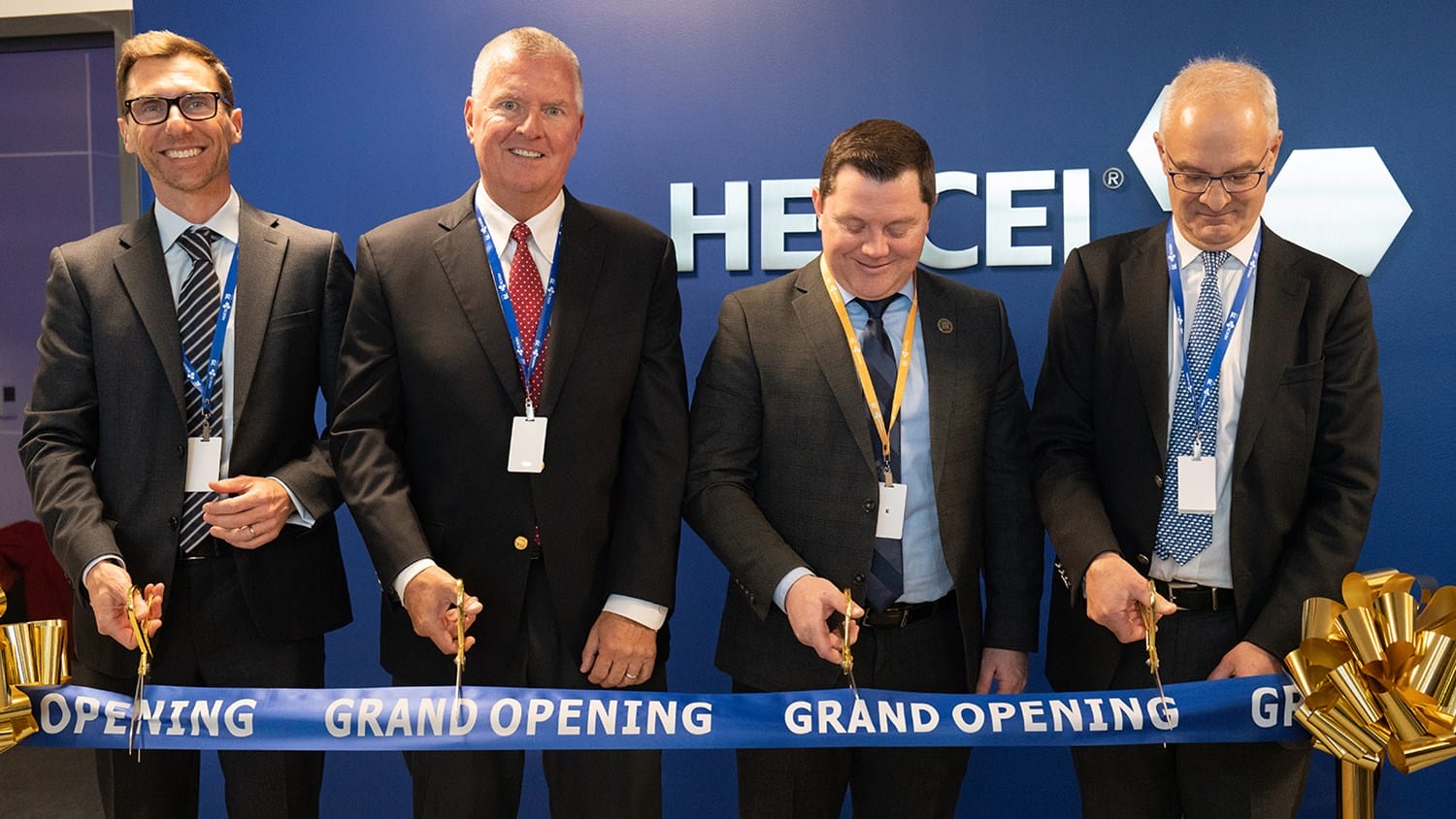
Georgia-based tech startup TreisD isn’t just launching its manufacturing facility in Knox County; the company is moving its headquarters right across the Tennessee River in Knoxville.
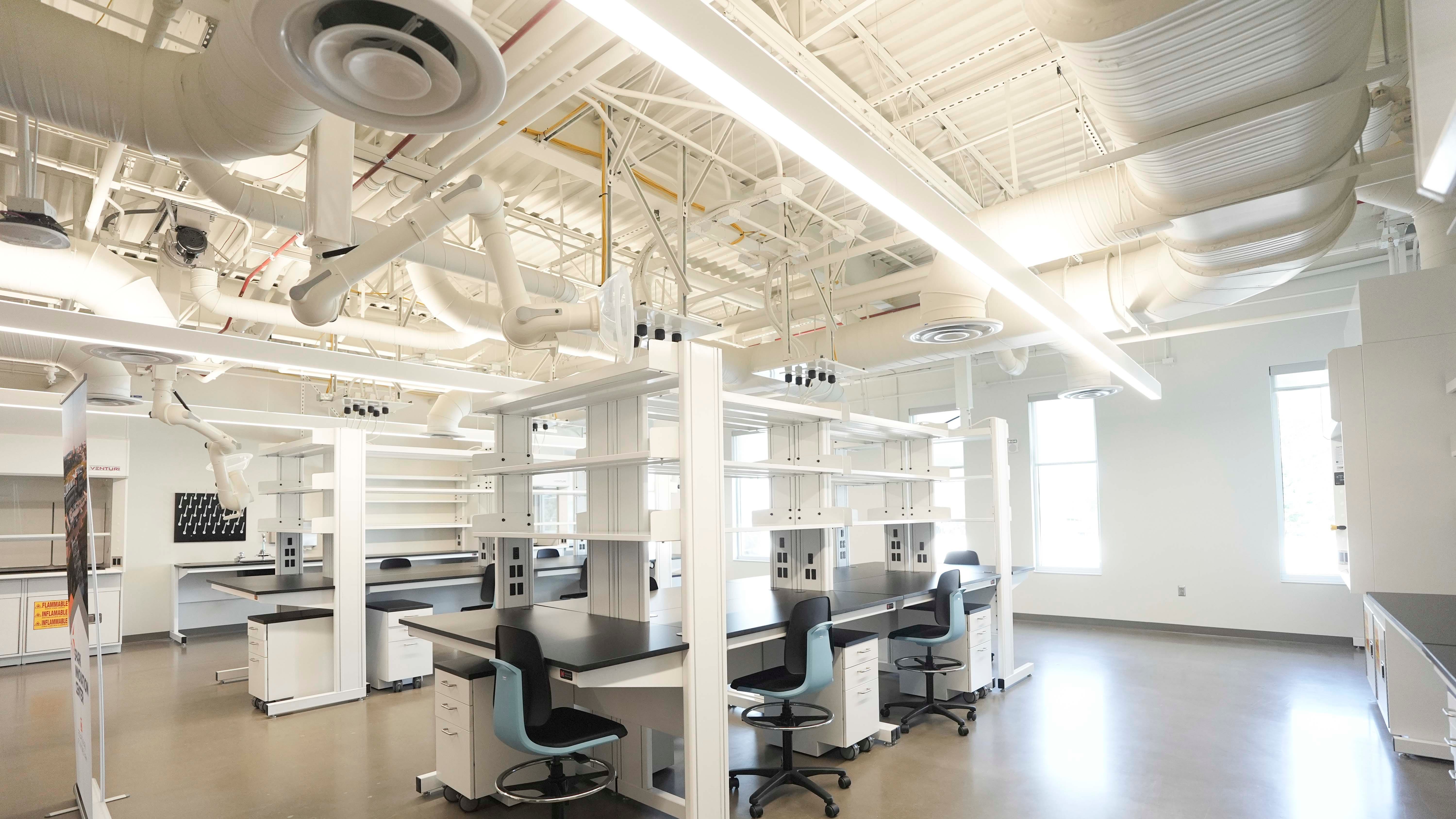
The company will operate in an office inside the Innovation South building at 2730 Cherokee Farm Way located on the University of Tennessee Research Park at Cherokee Farm. TreisD uses polymer plastics to turn two-dimensional images into 3D images viewable by the naked eye, printing the images onto a film that can’t be replicated. The images are complex and make it impossible to tamper with packaging and branding through conventional means.
The move plants the high-tech company in Knox County, and less than 30 minutes away from the future site of TreisD’s manufacturing facility in Mascot, Tennessee. Additionally, the company is working with the university and the research park to teach a capstone project course with students and lead a feasibility study visualizing sinkholes.
TreisD will leading study on sinkholes
East Tennessee is a region susceptible to sinkholes – scientifically called Dolines – which can occur because of soluble rocks like limestone located under the surface soil. The rocks dissolve when groundwater flows through them, forming underground cavities that lead to sinkholes.
TreisD comes into play with its 3D imaging technology, merging artificial intelligence capabilities with its image capturing to use large language and large vision models to capture 3D images of sinkholes underground. In other words, the goal is to create real 3D images to assess and visualize sinkholes, rather than taking multiple 2D images to craft a visual.
The study will help experts see the depth, magnitude and position of sinkholes, allowing for a better understanding and prediction of when sinkholes will occur. And with sinkhole damages in the country averaging $300 million a year, according to the U.S. Geological Survey, the study could be a game-changer.
“It’s a real-world issue that’s affecting lots of places with geology like East Tennessee, and developers who are trying to build projects have to deal with understanding where sinkholes are,” Cherokee Farm Development Corporation President and CEO Brett Malone told Knox News. “The idea came about through our collaboration to apply AI to actually predict where the next sinkhole might occur.”
TreisD leading course with University of Tennessee
While the study helps Tennesseans, TreisD’s new proximity to the University of Tennessee at Knoxville campus has opened the door to collaboration with the university via the capstone course “Capturing Legacy 3D Image Data for AI Model Training Project” led by Sam Pol, executive vice president of technology at TreisD.
The capstone is in partnership with the College of Emerging and Collaborative Studies. Students use Nimslo 3D analog cameras – developed in the 1980s by TreisD founder and chairman Leslie “Jerry” Nims – to develop 3D images, digitize them and then train AI models with the photos. The course launched this summer and concludes Sept. 16, but a second course has already started.
The cameras use four lenses to capture the images, using a method called “autostereoscopy” to make the image appear to have depth and movement without 3D glasses. Typically, it looks like the subject is rotating slightly. A good example can be found by searching “Nimslo” on GIF websites like giphy.com – or you can wait for TreisD to complete development on a new app for Nimslo GIFs.
TreisD is working with local professional photo print lab f/32 Photo to process and develop the film captured by students.
“I was so excited by the fact that Jerry Nims and his colleagues were working with UT students,” Nathan Dault, content manager for f/32 Photo, said in a press release. “We process 35mm and many other types of film, including film for Nimslo GIFs, and those of us in the industry are very familiar with the dedicated following for these cameras and their resurgence in order to leverage their unique 3D depth of field to create modern digital GIF images. This reputation precedes them, and it’s incredible to have Jerry and his team collaborating and innovating here in Knoxville.”
TreisD’s headquarters part of UT Research Park at Cherokee Farm growth
Before the UT connection, TreisD was feeling welcome in Knoxville through the Chamber of Commerce and financial institutions. UT’s research in polymer science – highly ranked in the world by U.S. News and World Report – became a foundational element for the company to work with UT. TreisD plans to manufacture optical polymer material in the manufacturing facility in the Eastbridge Business Park.
But the presence of TreisD in the research park adds to Cherokee Farm’s growing portfolio, which includes companies like Volkswagen Group of America. It ties into the park’s overall growth with plans to open a new entrance, connect the park to the UT Medical Center via a bridge and develop a 20-year vision for the future. An element UT Chancellor Donde Plowman wants to develop is a new innovation district on the property.
“We have counterparts who we work with to help introduce our technology companies to the university system. That’s what makes the research park a compelling destination, because we have that strong tie into all the resources of the university,” Malone said.
TreisD is using its space on the research park now, and plans to open the facility later this year. When it opens, TreisD will be firmly planted in Knoxville.
“We’re fully committed to Knoxville, and we’re committed to partnerships with Brett and the research park,” Nims told Knox News. “And we see an opportunity there in the future where we believe the university is going to end up being an innovative center. No question about it.”
Keenan Thomas reports on higher education for the Knox News business growth and development team. You can reach him by email at [email protected].
Support strong local journalism and unlock premium perks at knoxnews.com/subscribe.
link