New Frontiers in Space | Duke Today
-7.jpg?itok=TcA2k-xo "New Frontiers in Space | Duke Today")
He’s working to raise $6 million in seed money to get his company, Extellis, and his invention off the ground – literally. The seed funding will allow Extellis to launch a demo satellite – and to start selling images. “Thanks to a Gilhuly-funded project, within the Duke New Ventures program, our business strategy has come together,” Boyarsky says
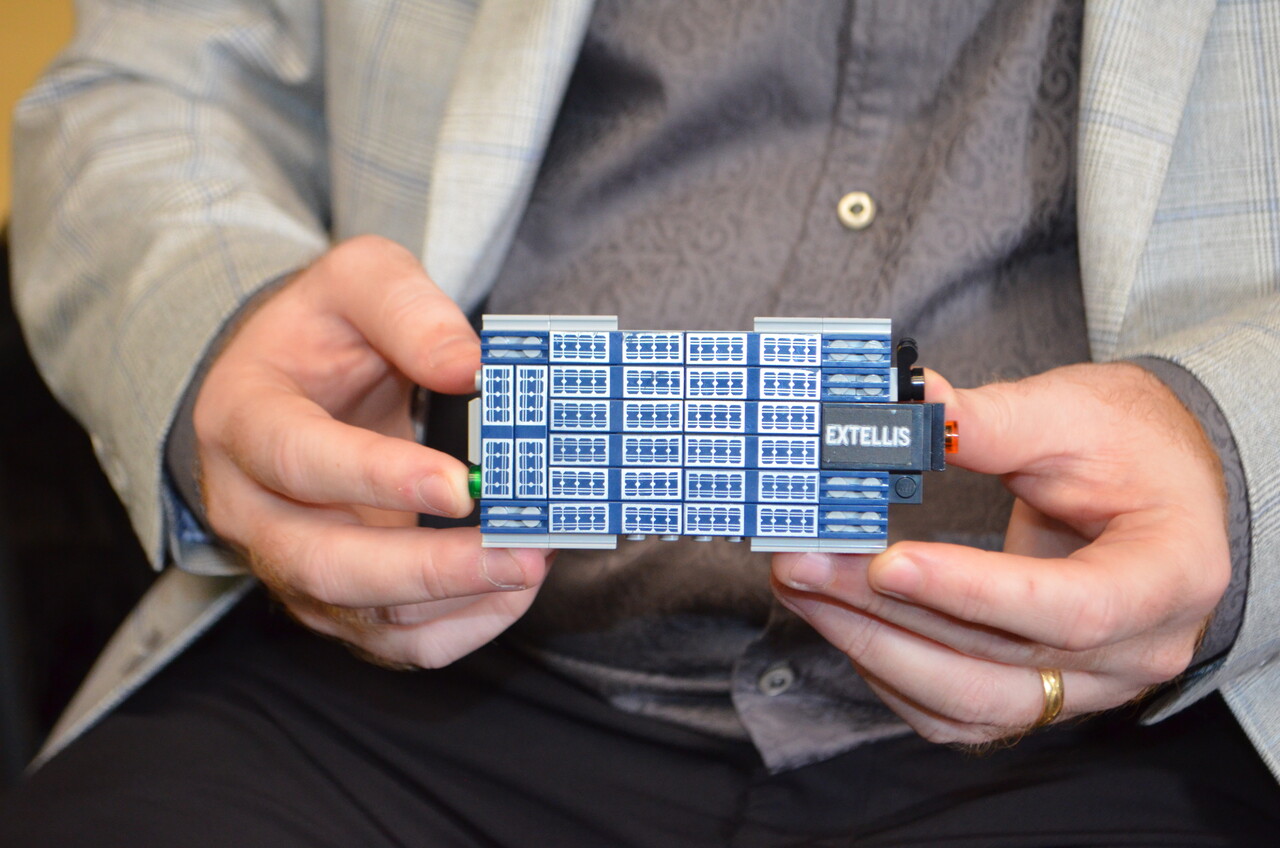
“With our antenna technology, we can build small satellites with large antennas. We will have a big antenna on one side, lots of solar panels on the other, and still only require a small, standard satellite module at the end,” Boyarsky says.
“The most exciting aspect of our company is the ability to democratize access to satellite imagery by lowering prices to a level affordable to customers beyond the military.”
Michael Boyarsky
Satellite cameras can’t see at night or through clouds, meaning they’re lucky to deliver a reliable image once a week. While microwave satellites like his can see through clouds and at night, current antennas can only collect a handful of images per day and are affordable only to the military, according to Boyarsky.
However, his technology has a wide range of commercial applications. It can sense excessive fertilizer and water being applied to farms, find pipeline leaks, and identify trees threatening nearby power lines. Another compelling use is for natural disaster prediction and response. It can also find new routes through the melting ice caps, allowing ships to move efficiently and save fuel.
“Most of these applications have been shown already, but the current satellites just can’t take enough images each day for everyday monitoring. The most exciting aspect of our company is the ability to democratize access to satellite imagery by lowering prices to a level affordable to customers beyond the military,” Boyarsky adds: “all thanks to our antenna technology.”
link