How Spiderplus Is Driving Digital Transformation in Construction Across Asia

Historically, Japan was a leading player in digital innovation during the 1990s and early 2000s, with companies like Nintendo and Sony becoming global household names. Yet over the past two decades, Japan’s pace of innovation in IT and digital transformation seems to have slowed, especially when compared to the rapid rise of China’s tech ecosystem, which has been fueled by government investment and a new wave of players. With this in mind, where do you see Japan today in terms of digital transformation?
It’s true that during the 1990s and early 2000s, Japan was at the forefront of consumer electronics and robotics. Companies like Sony were seen as pioneers in their fields. However, as global innovation shifted toward enterprise services, cloud platforms, and digital mapping software, Japan began to lose ground.
To be candid, I don’t believe there are any Japanese IT companies that have successfully launched an original product and established a dominant presence overseas. Large names such as NEC and Hitachi, for example, are primarily system integrators. They are highly regarded for their reliability and meticulous approach—qualities that attract overseas contracts—but they are not companies that create globally successful products in their own right.
There are some exceptions worth mentioning. Mercari has only recently begun generating modest profits in the United States. Cybozu’s Kintone platform is another notable product, but I hear it has not gained significant traction overseas either. In short, Japanese products often thrive domestically but fail to achieve international success.
In contrast, what excites me about Spiderplus is that within our vertical—construction digital transformation—our product is already receiving strong interest from across Southeast Asia. Over the past year, multiple companies in several countries have begun pilot trials, and in some cases, they have already signed contracts. This is a very encouraging sign that what began as a domestically focused solution can, in fact, resonate beyond Japan.
Our strategy is twofold: in Japan, we already have deep penetration into enterprise accounts, so we will continue to build on professional services and strengthen client relationships domestically. At the same time, Southeast Asia—with its rapid urbanization and booming high-rise construction markets—presents enormous potential. We see ourselves as very well positioned to contribute there.
You mentioned earlier that Japanese original software-based products rarely succeed abroad—certainly not in the GAFA-dominated technology sectors. Of course, Japanese automakers are world leaders, yet we often hear about the so-called “Galápagos syndrome,” where Japanese products evolve in isolation and don’t translate globally. Why do you think Japan has fallen behind in ICT and IT innovation?
This is just my personal perspective, but I believe the issue lies in Japan’s cultural approach to product design. Historically, Japanese products have been built primarily for Japanese users. Take mobile phones as an example—our famous “Galápagos phones” were highly sophisticated but tailored so specifically to Japanese needs that they had little relevance abroad.
Japanese applications are extremely user-friendly—for Japanese people. But they often lack the kind of universal, globally intuitive UI/UX that resonates across cultures. Global products like Slack or Salesforce may not feel particularly intuitive to Japanese users, but they become the standard because, worldwide, there is nothing better. People learn how to use them out of necessity.
This illustrates the challenge. Japanese companies can succeed in the domestic market, even going public on that success, but scaling globally—let alone reaching Nasdaq-level growth—remains elusive. That, in my view, is the core issue.
Bringing the discussion back to Spiderplus, you mentioned that Southeast Asia is a promising growth market. How do you intend to differentiate your product from other construction technology solutions already in the market?
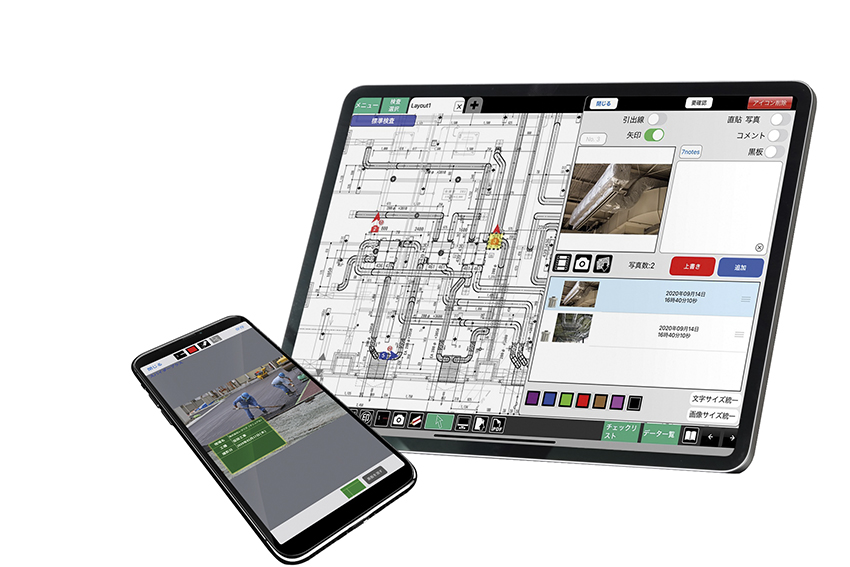
The most important factor is UI and UX. When I first launched Spiderplus 15 years ago, I told the development team to design it for on-site workers who, at that time, typically had very low IT literacy. The guiding principle was: if it isn’t simple, it won’t be used.
That’s why our interface is extremely intuitive. For example, an icon’s purpose should be instantly clear. Uploading drawings or generating reports should require almost no instruction. This design philosophy has proven to be a strong differentiator in Southeast Asia, where companies often remark that Spiderplus is “easy to understand and quick to adopt.”
Another point is that construction reporting formats in several Southeast Asian countries are very similar to those in Japan. That compatibility makes our solution especially attractive. Of course, there are countries where reporting standards differ completely, so we can’t claim universal fit. But where practices overlap, Spiderplus has a significant advantage.
Turning to the bigger picture, construction costs have risen sharply worldwide—by about 15% in the past year—due to inflation, labor shortages, and global supply chain pressures. Digital solutions are no longer a “nice-to-have,” but a necessity for managing cost and risk. How does Spiderplus help address these challenges?
Interestingly, at the moment, Japanese contractors and subcontractors are experiencing record profitability, despite higher material and labor costs. But the bigger challenge lies ahead: Japan’s overall population is shrinking, and the construction workforce is aging rapidly.
Today, perhaps only 20–30% of workers in the industry are comfortable with digital tools. For the sector to remain viable, that figure must move closer to 100%. Otherwise, there will come a point where Japan simply cannot deliver the same volume of construction projects.
That’s why we believe ICT, DX tools, robotics, and AI are no longer optional—they are essential for survival. Any company that fails to adopt these technologies will be left behind, not just in construction but across all industries.
We’re already seeing companies use their current profitability to invest in custom tools, sometimes developed in-house, and integrate them with Spiderplus via APIs. Others request bespoke solutions through our professional services. This is the phase of “building tools while resources are available.” The next phase must be about ensuring these tools are fully adopted across all employees—not just a small minority.
That links to another challenge: attracting younger talent. Many general contractors still rely heavily on paper drawings and analog methods, which can be unappealing to digital-native graduates. Do you think digitalization can play a role in making the industry more attractive to young people?
Absolutely. Today, students evaluating job opportunities are far less likely to choose companies that remain analog. If a company still requires staff to carry paper drawings, that is a red flag for many young candidates.
We’ve seen this firsthand: clients who adopted Spiderplus shared their case studies on our website, then repurposed them for recruitment campaigns. Those firms reported noticeable increases in hiring success.
It also makes a difference during internships. When students are handed paper drawings, their impression of the company is very different compared to when they are given an iPad with digital project management tools. Almost without exception, they prefer the latter.
This is why even small and mid-sized firms, which have been slower to digitize, are now realizing that adopting digital tools is not just about efficiency—it’s about attracting the next generation of workers.
Many construction tech providers focus on single-point solutions—inspection, drawing updates, or reporting. But fragmented systems can create inefficiencies. Spiderplus is developing “Spiderplus Workplace,” an integrated end-to-end platform. What is the strategic thinking behind this initiative?
Think about how most of us work day-to-day. It’s inefficient to constantly switch between separate tools for different tasks. The reason platforms like Google are so powerful is that they integrate multiple services seamlessly under one account.
Construction is no different. If processes remain fragmented, productivity suffers. That’s why we created the Workplace concept: a unified platform that integrates not only our own products but also third-party tools.
In practice, this means a Spiderplus account could be used to access other solutions—just as a Google account lets you move across multiple services. We are currently developing this ecosystem, with new products scheduled for integration later this year and early next year. The goal is a truly connected workspace.

Where do you see emerging technologies like AI, BIM integration, drones, or AR/VR fitting into your long-term vision for the Workplace platform?
Our vision is comprehensive. AI will play a larger role in automating tasks within our products, while BIM integration will simplify workflows even further. Beyond that, robotics, drones, AR, and VR will all be incorporated—for example, enabling remote site monitoring or immersive project reviews.
Ultimately, the Workplace must become the central hub that connects all of these technologies. As users adopt it, new needs will surface, and we will continue updating and expanding the platform to meet them.
You’ve also begun your overseas expansion, starting with Vietnam. What is your strategy for international markets?
To be candid, we chose Vietnam initially because it is administratively easy to establish a local subsidiary there. We envisioned using Vietnam as a hub for Southeast Asia, where many Japanese contractors—Shimizu, Obayashi, and major subcontractors—are already active.
We also partnered with Sigma, a leading local subcontractor, to adapt Spiderplus for the Vietnamese market. However, we quickly realized that Vietnam’s construction reporting practices differ too greatly from Japan’s. As a result, Spiderplus has not yet achieved strong product-market fit there.
That said, through extensive discussions across the region, we discovered that in countries where English is widely used—Malaysia, the Philippines, the UAE, Qatar, and others—reporting practices are much closer to Japan’s. In these markets, companies found Spiderplus to be simple, intuitive, and cost-effective. Over the past year, we have built strong connections in these regions, and more than a dozen large firms—ranging from 1,000 to 10,000 employees—are already trialing or adopting Spiderplus.
If these large-scale players adopt our system, we believe we can replicate the same success we achieved in Japan. Our immediate focus is on four to five Southeast Asian countries where the fit is strongest. Success there would dramatically expand both our revenue and our valuation.
That sounds like a pivotal moment. To conclude, 2027 will mark your company’s 30th anniversary. What is your vision for Spiderplus by then?
Our official target, which we have shared with the market, is to achieve 10 billion yen (approximately USD 70 million) in annual recurring revenue (ARR) by 2027, and to be fully profitable.
However, my personal ambition goes further. When we first set that target, we assumed overseas revenue would account for just 5%. Based on the momentum we’ve seen in the past year, I now believe international sales could reach 10–15%. If that happens, ARR could climb to 12 or even 13 billion yen. That is not an unrealistic projection.
In short, by 2027, I want Spiderplus not only to meet its stated goals but to exceed them—driven by strong overseas growth.
That’s an inspiring vision. We look forward to revisiting this conversation at your 30th anniversary. Thank you very much for your time today.
Thank you. It’s been a pleasure.
link