


Thursday, January 8, 2026
Media Contact:
Tanner Holubar | Communications Specialist | 405-744-2065 | tanner.holubar@okstate.edu
Interdisciplinary engineering research in the College of Engineering, Architecture and Technology at Oklahoma State University is pushing the boundaries of engineering through a grand
challenge: separating nitrogen from natural gas.
Separating nitrogen has been an issue plaguing the natural gas industry for decades,
and the researchers are meeting this challenge head-on. This research is in collaboration
with SK E&S Americas, Inc., through a $165,529 grant.
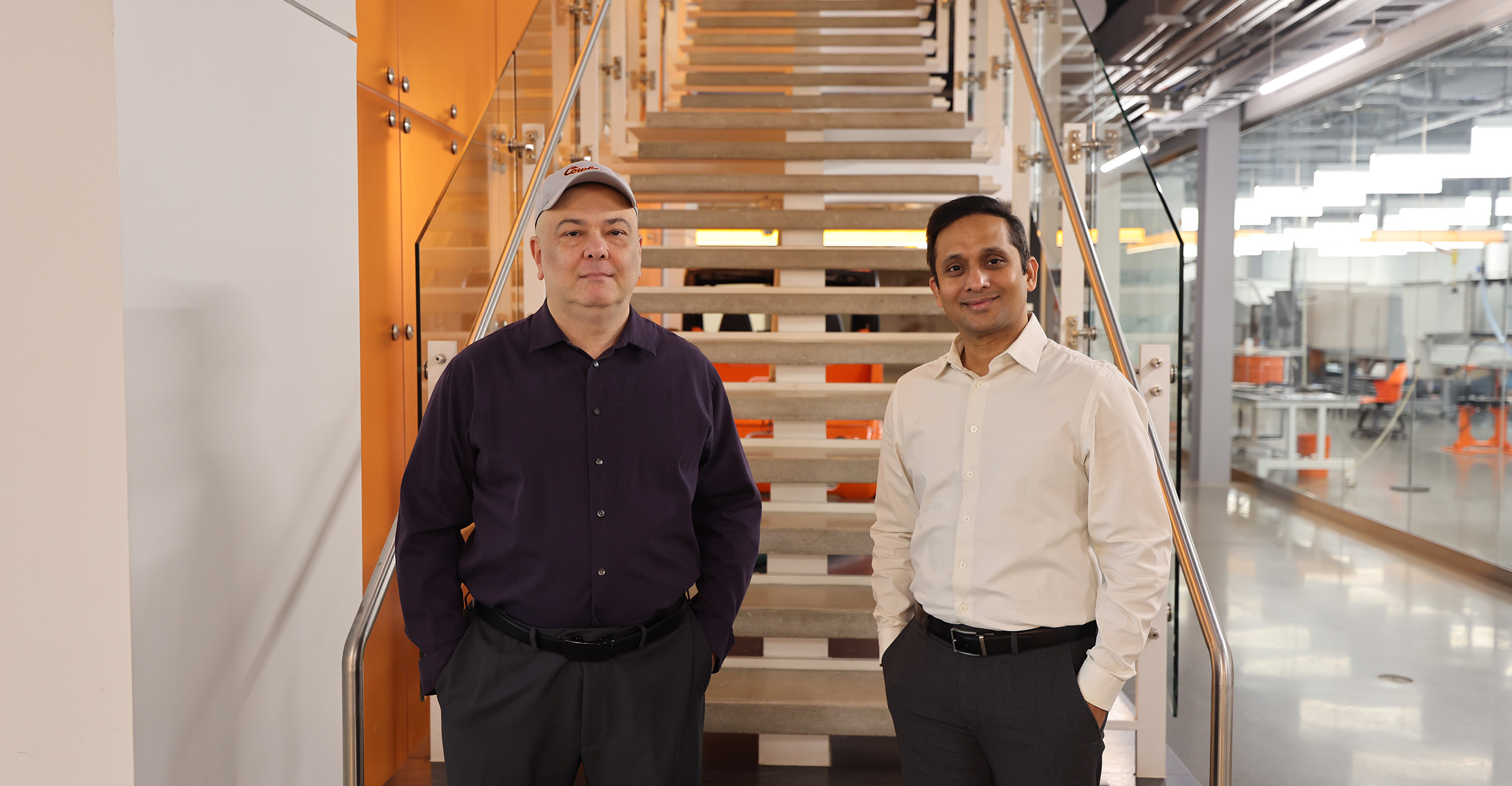
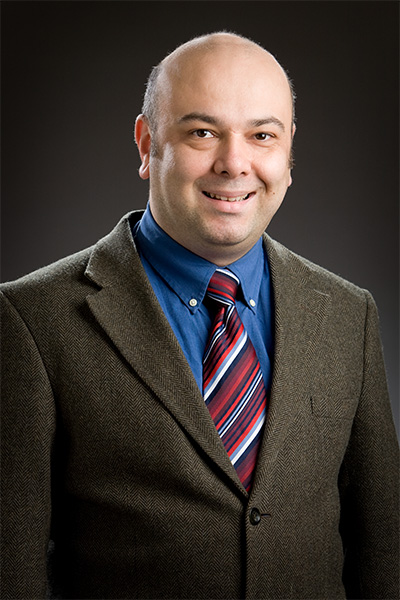
Under the oversight of Dr. Prem Bikkina of the School of Chemical Engineering and Dr. Kaan Kalkan of the School of Mechanical and Aerospace Engineering, the research team seeks to develop a novel concept to remove nitrogen from natural
gas, primarily methane.
It has been a challenging issue in the oil and gas industry because many wells produce
natural gas with too much nitrogen. The existing technology for removing nitrogen
is large, expensive and only practical at large plants.
The method produced by Bikkina and Kalkan’s team uses a different concept to capture
nitrogen. Nitrogen bubbles form more easily at specific liquid/solid interfaces than
methane. By focusing on the “wettability-driven” formation of bubbles, the team can
separate the gases while they are in the vapor phase from the dissolved state. This
method opens the door to a simpler and cheaper alternative to conventional technologies.


“A cost-effective and scalable method to separate N₂ from CH₄ could significantly
expand the marketability of stranded or sub-quality natural gas reserves,” Bikkina
said. “This would not only improve the economic feasibility of many domestic and international
gas plays but also support global energy transition goals by maximizing the use of
existing cleaner-burning resources while minimizing waste.”
“The collaboration aims to integrate our experimental expertise with SK’s global energy
initiatives, aligning scientific innovation with real-world application needs,” Bikkina
said.
Some of the main drawbacks of current technology highlight the need for new, low-energy
separation techniques tailored to specific operational uses. Some of the main disadvantages
include:
- Cryogenic distillation, while highly effective, is energy-intensive, capital-heavy and only economical at
large LNG-scale operations. - Membranes offer compactness and lower capital cost, but current materials fall well short of
the N₂/CH₄ selectivity (~17) needed for pipeline-grade separation. - Adsorption systems are energetically favorable but require large volumes because CH₄ adsorbs
more readily than N₂. - Absorption lacks practical solvents with strong N₂ selectivity, primarily due to nitrogen’s
chemical inertness.
The team will conduct fundamental experiments to determine which conditions cause
nitrogen and natural gas bubbles to form.
“We are exploring both surface properties (e.g., wettability) and fluid properties
using water and other solvents — including ionic liquids,” Bikkina said. “In future
stages, we plan in situ gas composition measurements using confocal Raman spectroscopy
and microneedle gas collection, followed by GC or MS analysis, to confirm selective
nucleation at the molecular level.”
Engineering professions coming together
This research brings expertise from CHE and MAE together to bridge the gap between
academic innovation and industrial necessity.
The CHE portion of the team provides expertise in thermodynamics, interfacial science
and phase behavior. The MAE cohort contributes expertise in advanced optical diagnostics
through Raman spectroscopy.
“This interdisciplinary framework ensures that both fundamental material behavior
and real-time analytical techniques are applied to solve an efficient separation challenge,”
Bikkina said.
This research is an excellent opportunity for graduate students in CEAT to gain practical
experience researching a defined industry need. CHE graduate students will lead experiments
on bubble nucleation, surface preparation, and gas collection techniques. One of Kalkan’s
graduate research assistants will focus on confocal Raman spectroscopy.
It is a unique research opportunity to participate in fundamental research while working
to solve a problem that has long plagued the natural gas industry.
This project is true to OSU’s land-grant mission of advancing scientific knowledge
to benefit society. It is also an example of CEAT researchers setting out to develop
ways to address long-standing issues caused by technological and scientific limitations.
This research team is answering the call to overcome these limitations through innovation
in the face of a challenge.
link